
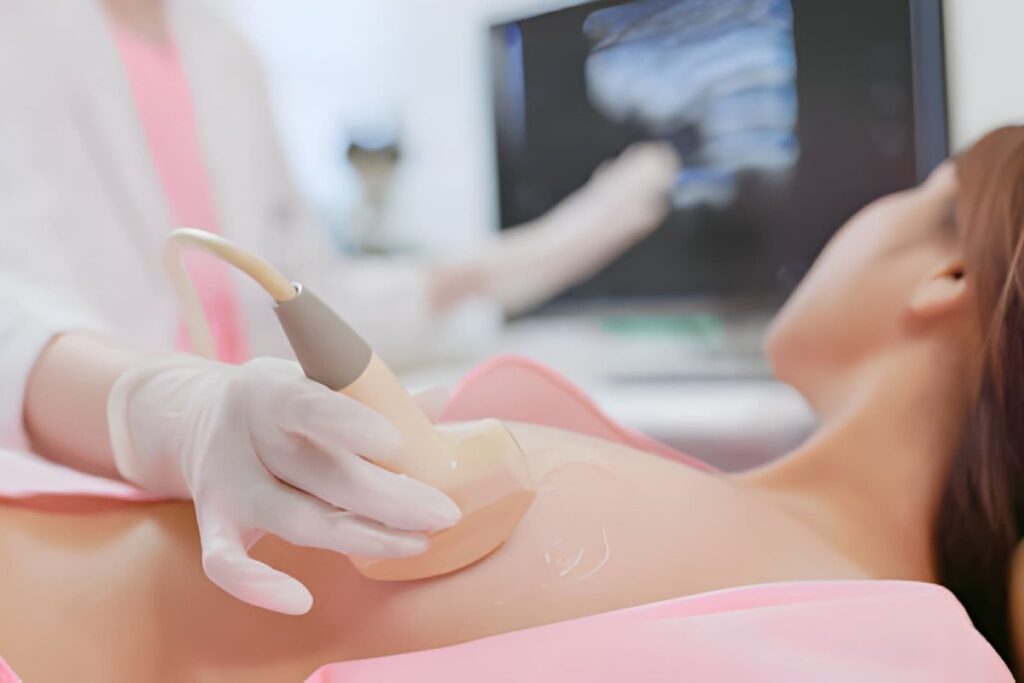
A woman’s mammogram yields a clean result—free of the stressful callbacks or follow-up appointments to worry about. Yet, she knows that she has dense breasts, and that fact remains unchanged. The letter giving her the “all-clear” isn’t quite as reassuring as it ought to be.
There is a gap between the result and true peace of mind. For millions of women, incorporating a breast ultrasound for dense breasts into their annual screening routine means putting an end to that anxiety.
When Mammograms Hit a Roadblock
Dense breast tissue and tumours share a frustrating characteristic in mammography: both appear white. This is the same imaging challenge radiologists have grappled with for decades—and it is not unique to older machines or low-quality scans. The laws of physics do not favour a clear distinction between dense tissue.
What surprises most women is the fact that nearly half of them have dense breasts. Unlike fatty tissue, density is not something that can be detected by touch during a self-exam. It is determined by a radiologist after interpreting a mammogram, meaning many women only learn about it after the fact.
Women with dense breasts also face a 4-to-6-fold increased risk of developing breast cancer. Performing an additional breast ultrasound in cases of dense breasts—such as the one offered by the SOFIA 3D system—improves visibility through the tissue that mammograms struggle to interpret. In this way, earlier and more accurate detection becomes a realistic goal, rather than a mere stroke of luck.
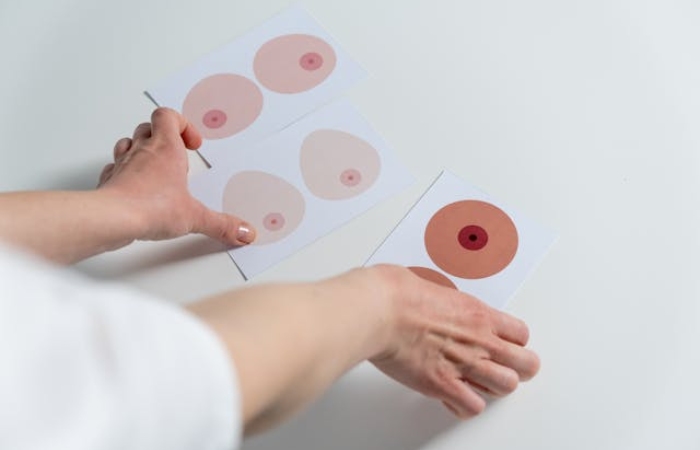
Dense breast tissue consists primarily of fibrous and glandular tissue, rather than fat. Density itself does not cause cancer. The real problem is “masking”—a situation in which tumours remain hidden behind tissue that, on X-rays, appears identical to the tumours themselves. Knowing your breast density category (ranging from A to D) gives you a concrete piece of information to share with your doctor, rather than simply voicing vague concerns.
What Ultrasound Actually Detects
Ultrasound uses sound waves, not X-rays; consequently, it behaves differently in dense tissues. Precisely this physical difference constitutes its primary advantage. While a screening mammogram might reveal a faint white spot, an ultrasound allows for a clearer distinction between a fluid-filled cyst and a solid mass.
Various research studies consistently demonstrate that supplemental ultrasound enables the detection of 3 to 4 additional cases of cancer for every 1,000 women screened—a figure higher than what mammography achieves on its own. This is a significant statistic, particularly for women who undergo annual mammograms and mistakenly assume that this alone is sufficient.
Furthermore, the examination itself is performed in real time and is adaptable. Technicians can adjust the angle, pressure and focus on specific areas during the test. Moreover, the procedure involves no exposure to radiation—an aspect of great importance for women who consider the cumulative effect of breast imaging tests over 30 or 40 years of screening.
Who Benefits Most?
Not all women require a supplemental ultrasound, but the following groups present the strongest arguments for undergoing one:
- Women who have been formally notified that they have dense breast tissue in their mammography report.
- Women with a personal or family history of breast cancer, even in the absence of a confirmed genetic mutation.
- Younger women in their 30s who are beginning to develop a proactive screening strategy before reaching the standard screening age.
- Women who have previously undergone breast surgery or biopsy, cases in which scar tissue further complicates the interpretation of mammograms.
Special mention also goes to women who experience unexplained breast pain and intense anxiety regarding mammography results that prove inconclusive. A follow-up ultrasound—after years of receiving letters containing phrases such as “we would like to re-examine you”—can serve as both a diagnostic clarifying tool and a screening tool. Reducing diagnostic uncertainty holds real psychological value.
Incorporate It into Your Routine
Ultrasound is a complement to mammography, not an alternative. The most practical approach is to schedule it during the same visit—or within the same week—to minimise the need for repeated appointments.
A common misconception is that a referral from a specialist is required to request supplemental screening tests. Your primary care physician or gynaecologist can order a breast ultrasound for dense breasts. If they haven’t mentioned it to you, ask them directly. Know your breast density category and bring it up at your next checkup. Healthcare professionals will better understand your needs when you can speak specifically about your results.
Currently, some imaging centres offer combined packages featuring 3D mammography and ultrasound for women with dense breasts. It is important to ask whether the centre you have chosen offers any similar options.
The Debate Over Costs
Coverage for supplemental breast ultrasounds in cases of dense breasts varies considerably, and it is important to keep this in mind beforehand. In some U.S. states, insurers—such as Medicare—are mandated to cover breast ultrasounds for women with dense breast tissue. In others, this procedure may be classified as a diagnostic ultrasound rather than a screening ultrasound, which affects reimbursement differently.
Instead of assuming the cost is unaffordable, contact your insurance provider and ask specifically how they classify supplemental ultrasounds for patients with dense breasts. Additionally, inquire at your imaging centre about self-pay rates (without insurance). Many institutions offer prices that are more affordable than you might expect for patients paying out of pocket.
Legislation in this area is constantly evolving, increasingly trending toward broader coverage. Staying informed places you in a stronger position to advocate for the care your screening plan truly requires.
A Clearer Picture
The woman in the first case—the one with a mammogram showing no findings, yet who still feels uneasy—does not have to stop there. Supplementing her mammogram with a breast ultrasound provides her radiologist with more information to analyse and greater confidence in her diagnosis.
Adopting a proactive method to your health means building a comprehensive picture of your condition, rather than waiting for a problem to arise. Start by finding out your breast density category at your next appointment. That simple question can truly change the course of your medical care.